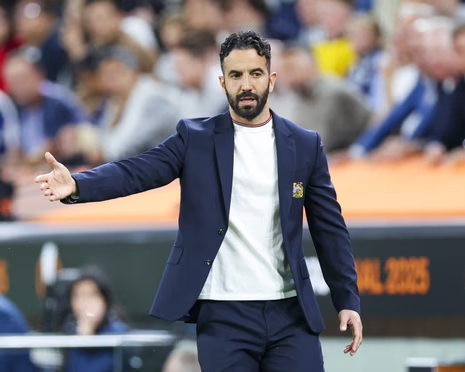
Ruben Amorim’s explosive parting shot — insisting he was hired to be a manager, not a coach — has ripped open a fault line in modern football governance. His public criticism of Manchester United’s recruitment processes and the swift breakdown that followed crystallise a wider debate: who should control transfers, who sets long‑term strategy, and what job title actually means in 21st‑century clubs.
Quick explainer: manager vs head coach
A manager is the senior football executive on the sporting side: responsible for long‑term club strategy, recruitment, contracts and the youth pathway, and often wielding significant influence or final say over transfers and squad building.
By contrast, a head coach concentrates on the day‑to‑day football work — planning training, shaping tactics, preparing the team for matchday and making selection decisions — while recruitment and long‑term planning are typically handled by a sporting director or recruitment team.
The distinction matters because the job title signals where authority lies: who signs players, who sets the club’s footballing direction, and who answers to the board. That clarity (or lack of it) shapes hiring, expectations and accountability; when roles are ambiguous, power struggles and public disputes become far more likely.
The Amorim saga: timeline and turning points
Opening salvo: After a 1–1 draw at Leeds, Amorim publicly complained about the club’s information flow and recruitment, saying he had been brought in to be a manager with control rather than a mere coach.
Escalation: His remarks — telling scouting and sporting staff to “do your jobs” — were widely reported and interpreted as a direct challenge to United’s sporting hierarchy.
Aftermath: Within days the relationship collapsed; Amorim was dismissed after 14 months amid reports of a power struggle and concerns over conduct and alignment with the club’s structure.
Takeaway: Public statements by a coach about role and authority often accelerate internal disputes into full crises.
Historical parallels: this is not the first time
From the Ferguson era to the split model: English football once revolved around the all‑powerful manager who controlled transfers and tactics. The modern model — head coach plus sporting director — has redistributed power and created new friction points.
Recent high‑profile clashes: Several clubs have seen coaches publicly criticise recruitment or resign when denied transfer control. These episodes follow a familiar pattern: misaligned expectations, public airing of grievances, and rapid leadership change. This has especially been seen a lot in the English Premier League, with Enzo Maresca going on a rant against Chelsea's management team and owners that led to his own dismissal a few days before Amorim's exit.
Why history matters: Repeated examples show that the problem is structural, not personal — a governance model that requires clearer role definitions and better communication.
Practical implications and recommendations for clubs
Define roles in writing: Contracts must state who controls transfers, youth policy, and recruitment.
Align decision‑makers: Sporting directors, boards, and coaches need a clear, published decision pathway.
Manage public messaging: Internal disputes should be contained; public airing of grievances accelerates breakdowns.
For coaches and managers
Negotiate authority up front: If you want to shape the squad, secure explicit transfer control in your contract.
Accept the remit or walk away: Know whether you’re being hired as a head coach or a manager and act accordingly.
Closing: a structural problem, not just a personality clash
Amorim’s exit is a headline moment, but the underlying issue is systemic. As clubs chase efficiency and specialisation, the split between coaching and recruitment will keep producing friction unless roles are clarified and power is aligned. For fans and boards alike, the lesson is simple: titles matter because they define power — and power, when unclear, always finds a way to explode into the open.































Comments
Sign in with Google to comment, reply, and like comments.
Continue with Google